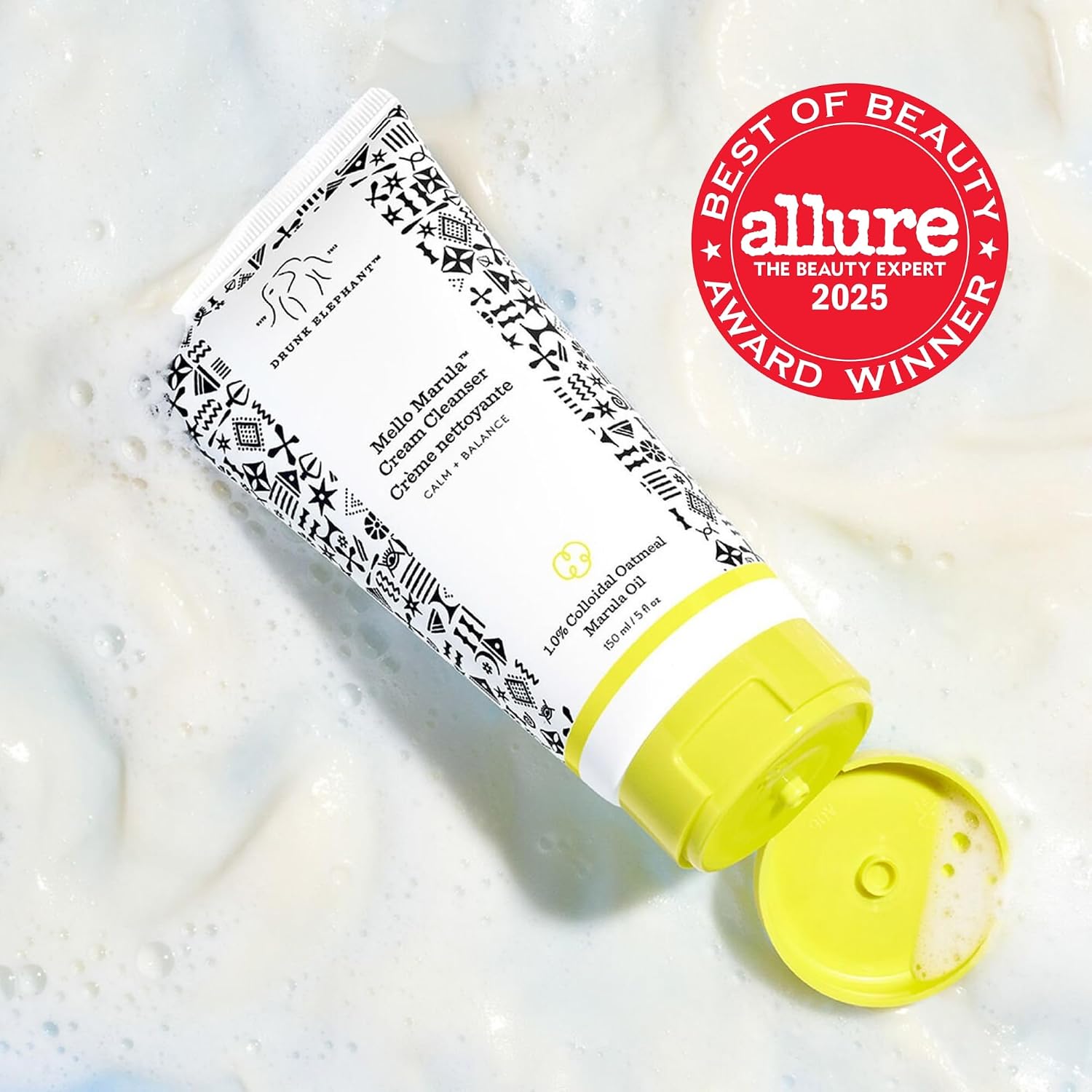
If you wash your face and the skin immediately feels tight — almost papery, like it’s been shrink-wrapped — your cleanser is almost certainly the culprit. Most mainstream face washes, even ones labeled “gentle,” rely on foaming agents called surfactants (detergent-like molecules that lift oil and dirt) that are very good at their job. Too good, actually. They don’t just remove makeup and pollution; they also strip away the thin, waxy film called the skin barrier — the protective layer your skin produces naturally from oils and proteins to hold moisture in and irritants out. For people with dry or easily irritated skin, this is the core problem: the cleanser that’s supposed to start your routine well is quietly undoing it before the rest of your products even get a chance. This guide breaks down exactly why that happens, what cream and balm cleansers do differently at the ingredient level, and how to pick the right one based on where your skin actually is right now.
| EDITOR'S PICK[CLEARSTEM - GENTLECLEAN Vitamin](https://www.amazon.com/dp/B07PCVCPNM?tag=greenflower20-20)… | Mid-tier[KORRES Greek Yoghurt Foaming Cr](https://www.amazon.com/dp/B0GH94SMDP?tag=greenflower20-20)… | Budget pick[Mad Hippie Cream Cleanser](https://www.amazon.com/dp/B00IYBAOVM?tag=greenflower20-20) – Gen… | |
|---|---|---|---|
| Size | 6 fl oz | — | 4 Fl Oz |
| Form | — | Cream to Foam | Cream |
| Key Ingredients | Vitamin C, Goldenseal, Green Tea | Greek Yoghurt | Hyaluronic Acid, Jojoba Oil, Green Tea |
| Makeup Remover | ✓ | ✓ | — |
| Cruelty Free | ✓ | — | — |
| Gluten Free | ✓ | — | — |
| Price | $38.00 | $24.64 | $16.99 |
| See on Amazon → | See on Amazon → | See on Amazon → |
Why Foam Washes and Dry Skin Are a Genuinely Bad Match
The issue isn’t foam itself — it’s the class of surfactants required to produce it. Sodium lauryl sulfate (SLS) and its close relative sodium laureth sulfate (SLES) are the workhorses of most drugstore cleansers and many prestige ones. They generate lather efficiently, and lather feels clean. The problem, documented in detail by The Beauty Brains (a cosmetic chemistry podcast and blog run by industry formulators), is that SLS in particular is a known irritant that raises skin pH and degrades the tight junctions between skin cells that keep moisture locked in.
Paula’s Choice Expert Advice notes that the ideal skin surface pH sits between 4.5 and 5.5 — mildly acidic. Many foaming cleansers land closer to 7 or 8, which is closer to neutral or slightly alkaline. That temporary pH disruption compromises an enzyme system in the outer skin layer that normally helps regulate barrier function. For oily or combination skin that rebounds quickly, this is a minor inconvenience. For dry or sensitized skin, it’s a recurring injury.
Healthline’s review of skin barrier science (reviewed by Cynthia Cobb, DNP, APRN) explains the downstream effect clearly: a damaged or chronically disrupted barrier loses water faster, reacts more strongly to environmental irritants, and takes longer to repair between exposures. If you’re applying serums and moisturizers and still waking up to tight, flaky, or reactive skin, the cleanser step is often the variable people forget to audit.
The tradeoff you’re actually making: Foaming cleansers offer superior removal of heavy sebum and waterproof makeup, and they rinse without residue. Those are real benefits. For oily skin types, the tradeoff is reasonable. For dry skin, you’re paying a structural cost — barrier compromise — for a cleansing power level your skin doesn’t need.
What Cream and Balm Cleansers Actually Do Differently
Cream cleansers and cleansing balms both work on the same principle: they use emollients (skin-softening, occlusive ingredients like plant oils, butters, and waxes) as the primary cleansing vehicle rather than surfactants. The mechanism is oil-dissolves-oil, technically called the “like dissolves like” principle. Sebum, sunscreen, and most makeup are oil-based, so an oil-rich formula lifts them effectively without the need for aggressive detergents.
The distinction between cream and balm formats matters for decision-making:
- Cream cleansers (think Tatcha The Rice Wash, Augustinus Bader The Cream Cleanser) typically contain some water and a small amount of mild surfactant — often glucosides like decyl glucoside, which Allure’s updated cream cleanser roundup consistently notes is one of the gentlest surfactants available. They emulsify with water and rinse relatively clean. They suit dry skin that still wants a rinse-off finish without residue.
- Cleansing balms (Farmacy Green Clean, Elemis Pro-Collagen Cleansing Balm) are anhydrous or nearly water-free at room temperature — solid or semi-solid, melting on contact with skin warmth. They require a separate rinse or a warm cloth removal. They leave more residue by design; that residue is the protective film that replaces what rinsing removes. Reviewers on Byrdie’s best cleansing balms roundup consistently describe the post-cleanse skin feel as “like you applied a light moisturizer.”
By the numbers:
- Foaming cleansers: typical post-wash TEWL (transepidermal water loss — the rate moisture escapes through skin) increase of ~30–40% in clinical observations, per dermatology literature cited in Healthline’s barrier science overview.
- Non-foaming emollient cleansers: TEWL increase after cleansing is measurably lower, with some fatty acid–rich formulas showing near-neutral impact.
- EWG Skin Deep surfactant ratings: SLS scores a hazard rating of 1–2 but carries a “data gap” flag on skin irritation; decyl glucoside and coco-glucoside score 1 with no concern flags.
How to Read the Ingredient List Before You Buy
This is where the intermediate-level decision-making actually happens. “Cream cleanser” on the front of the bottle is a marketing category, not an INCI (International Nomenclature of Cosmetic Ingredients — the standardized list of ingredients on the back) guarantee. Some products marketed as cream cleansers still lead with sulfates or include alcohol denat. high in the formula, which is a dealbreaker for dry, sensitized skin.
Green flags in the INCI list (look for these near the top):
- Glycerin — a humectant (draws water to the skin) that signals the formula is designed to maintain rather than strip hydration
- Plant oils: jojoba oil (technically a wax ester that mimics skin’s own sebum), squalane (a lightweight emollient found in Vintner’s Daughter Active Botanical Cleanser), sweet almond oil, sunflower oil — all indicate emollient-first formulation
- Fatty acids / fatty alcohols: cetyl alcohol, stearyl alcohol — these are non-irritating thickeners, not drying like isopropyl alcohol
- Glucoside-class surfactants: decyl glucoside, coco-glucoside, lauryl glucoside — mild, plant-derived, low irritation potential per EWG Skin Deep ratings
Red flags for dry/sensitive skin:
- Sodium lauryl sulfate (SLS) or sodium laureth sulfate (SLES) in the top five ingredients
- Alcohol denat. or isopropyl alcohol — genuinely drying, often used in “oil-free” formulas that aren’t actually appropriate for dry skin
- Fragrance (parfum) high on the list — not a stripping agent per se, but a leading sensitizer for reactive skin types; Paula’s Choice Expert Advice specifically flags fragrance as a top unnecessary irritant in cleansers
- High concentration of clay (kaolin, bentonite) — excellent for oily skin, dries by design
The “if X, then Y” test here: if you pick up a product labeled “nourishing” or “cream cleanser” and SLS or alcohol denat. appears in the first six ingredients, put it back. The label is marketing; the INCI is the contract.
Matching the Format to Where Your Skin Is Right Now
Not all dry skin is in the same state, and the format that’s right for you depends on how compromised your barrier currently is.
Scenario A: Mild dryness, occasional tightness, otherwise stable skin A cream cleanser with mild glucoside surfactants rinses clean and is unlikely to over-strip. Youth to the People Superfood Cleanser is a gel-cream hybrid that reviewers consistently rate well for normal-to-dry skin that wants thorough cleansing without a heavy residue feel. Tatcha The Rice Wash is frequently cited by Allure and Byrdie reviewers as a benchmark for this category — a rice-bran powder activated with water that foams gently but maintains slip and doesn’t leave skin feeling depleted.
Scenario B: Chronically dry, regularly flaky, reactive to multiple products This is where balm formats earn their premium. Farmacy Green Clean uses a sunflower and moringa oil base and is widely discussed in Byrdie’s cleansing roundups as one of the more effective double-cleanse first steps for dry-sensitive types. Elemis Pro-Collagen Cleansing Balm, at the higher investment tier, is noted by estheticians recommending take-home regimens for its rosehip and elderberry oil content and its particularly occlusive finish. The tradeoff: balms require a cloth or second rinse for full removal, and they can feel too heavy as the only step for humid climates or warmer months.
Scenario C: Post-procedure or actively disrupted barrier (post-retinoid purge, post-peel, windburned) In this state, even mild surfactants can be too much. A truly surfactant-free oil-to-milk cleanser or a micellar water (for very light days) may be the better short-term choice until the barrier stabilizes. Augustinus Bader The Cream Cleanser is frequently positioned at this tier by dermatologists cited in Allure’s dry skin features — its TFC8 complex is intended to support cell renewal, and the formula uses no fragrance, no alcohol, and minimal surfactant.
The Double-Cleanse Question for Dry Skin
Double cleansing — using an oil-based first cleanse to remove SPF and makeup, followed by a water-based second cleanse — originated in Korean skincare and has been widely adopted. For dry skin, the standard protocol needs adjustment.
The mistake most people make: doing a full foaming second cleanse after the balm step. If your skin is dry or barrier-compromised, the balm alone is often sufficient on low-makeup days. Paula’s Choice Expert Advice explicitly notes that over-cleansing (multiple surfactant contacts per day) is a documented driver of barrier deterioration. On days when you’re wearing heavy SPF or long-wear foundation, a balm first cleanse followed by a gentle cream cleanser second is appropriate. On bare-face or low-SPF days, one balm pass with a warm cloth is enough.
The decision rule: If your skin feels tight or looks dull immediately after cleansing — before any toner or serum — your cleanser is the problem. Switch the format first before adding more products to compensate. A corrective moisturizer cannot fully offset a disruptive cleanser used twice daily, every day. The math doesn’t work in your skin’s favor.
The cleanser step is the one most people change last. It should be the one you audit first.