If you have ever watched a cleansing balm or oil swirl white in the presence of water before rinsing cleanly away, you have already seen the chemistry that makes double cleansing work. Double cleansing is simply a two-step approach: you start with an oil-based cleanser to dissolve and lift away oil-soluble debris — SPF, silicones, sebum, long-wear makeup — and then follow with a water-based cleanser to clear anything that remains. The logic is sound: water-based cleansers alone struggle to break down the oil-soluble ingredients that make modern sunscreens and foundations so durable. An oil cleanser, applied to dry skin before water ever touches your face, does that job first. The catch — and the reason we spent an unreasonable number of evenings cross-referencing INCI lists (the standardized ingredient lists required on every cosmetic product) — is that the oil cleansers on the market vary enormously in what they actually contain, and a few popular formulas carry ingredient trade-offs that are easy to miss without a close read.
This audit is for readers who already understand why they want an oil cleanser but are trying to figure out which one earns a permanent spot in their routine. We will name the tradeoffs explicitly, show you what to look for in an INCI list, and end with clear decision rules by skin type and priority.
| EDITOR'S PICK[Dermalogica Precleanse Oil Clea…](https://www.amazon.com/dp/B000X1LOJM?tag=greenflower20-20) | Mid-tier[Sulwhasoo Gentle Cleansing Oil](https://www.amazon.com/dp/B09NY7SY7C?tag=greenflower20-20) | Budget pick[SKIN1004 Madagascar Centella Li…](https://www.amazon.com/dp/B0D9TX8G86?tag=greenflower20-20) | |
|---|---|---|---|
| Key Ingredients | — | — | Centella Asiatica |
| Size | 5.1 fl oz | 6.76 fl oz | 6.76 fl oz |
| Suitable for | — | Dry & Sensitive | — |
| Oil Type | — | — | Light |
| Target Concern | Pores, Makeup | Hydration | Gentle |
| Price | $49.00 | $34.00 | $9.49 |
| See on Amazon → | See on Amazon → | See on Amazon → |
What the INCI List Actually Tells You About an Oil Cleanser
An INCI list is the ingredient roster printed on every cosmetic product, organized in descending order by concentration down to 1 percent — below that threshold, brands can list ingredients in any order. For oil cleansers, three categories of ingredients determine whether a formula is genuinely effective and genuinely clean.
1. The base oils — what does the dissolving The first several ingredients in any oil cleanser are doing the heavy lifting. Oils high in linoleic acid (like sunflower, rosehip, and hemp seed) are frequently praised by formulators for being less comedogenic — meaning they are less likely to clog pores — than oils high in oleic acid (like coconut and olive), per Paula’s Choice Expert Advice on choosing a cleansing oil. For oily or acne-prone skin, a linoleic-dominant base is a meaningful distinction, not a marketing nicety. For dry or mature skin, oleic-rich oils can feel more nourishing without a trade-off.
2. The emulsifier — what lets the oil rinse clean This is where a lot of oil cleansers quietly diverge. A well-formulated cleansing oil should contain a water-soluble emulsifier — an ingredient that allows the oil to blend with water and rinse away without leaving a film. The Beauty Brains blog and podcast have addressed this directly: without an effective emulsifier, an oil cleanser can leave a residual layer on skin that traps whatever it was supposed to remove, defeating the purpose. Common emulsifiers to look for include PEG-based surfactants, polysorbates, and certain plant-derived glucosides. The word “PEG” in an ingredient name signals an ethylene-oxide-derived compound; these are generally low-hazard at low concentrations per the EWG Skin Deep Database, but they sit in a gray zone for shoppers following strict Credo Clean Standard or EWG Verified certification, which either restrict or flag certain PEG derivatives.
3. Fragrance and sensitizers — where “natural” formulas often add risk Fragrance is the ingredient category where clean-positioned oil cleansers most frequently underperform their branding. Natural fragrance — listed as “fragrance (natural)” or identified through named botanical extracts like citrus peel oil, linalool, or limonene — can be just as sensitizing as synthetic fragrance for reactive skin types. Healthline’s overview of oil cleansing notes that essential oils used for scent are among the more common culprits in contact dermatitis from skincare. An oil cleanser marketed as “clean” that leads its fragrance blend with citrus oils is not automatically a safer choice for sensitive skin.
The Formulas That Hold Up to Scrutiny (and the Trade-offs to Know)
We reviewed INCI lists across widely discussed oil cleansers at multiple price points, cross-referencing with EWG Skin Deep hazard scores, Credo Clean Standard compliance notes, and aggregated reviewer patterns at Byrdie and Healthline. Here is what the pattern across that research shows.
Budget-to-Mid Tier
Acure Brightening Facial Scrub is a recurring entry point for clean-beauty newcomers, but it is not an oil cleanser — worth flagging because it often appears in the same search results as oil-cleansing options. For shoppers in the $10–$20 range genuinely looking for an oil-format cleanser, the market is thin at this tier with truly clean INCI lists. Many budget cleansing oils lead with mineral oil (a heavily refined petroleum derivative that is not inherently harmful but conflicts with natural-beauty positioning) or rely heavily on fragrance to compete on sensory experience.
Farmacy Green Clean Makeup Meltaway Cleansing Balm ($34) — technically a balm-to-oil texture — is one of the more audited formulas in the mid-tier. Its base is primarily sunflower seed oil (linoleic-dominant) and moringa seed oil, with a blend of waxes that give it its balm texture. Reviewers across Byrdie consistently note it rinses reasonably cleanly for a balm, which is attributable to the emulsifying agents in the formula. The INCI list includes fragrance, which is the main flag for reactive-skin shoppers. It carries MADE SAFE certification, which reviews fragrance ingredients for known hazards — a stronger signal than “natural fragrance” alone.
By the numbers:
- MADE SAFE certification requires review of ~5,000 known or suspected harmful chemicals
- Credo Clean Standard restricts approximately 2,700 ingredients
- EWG Verified products must score 1–2 on EWG Skin Deep for every ingredient
Prestige Tier
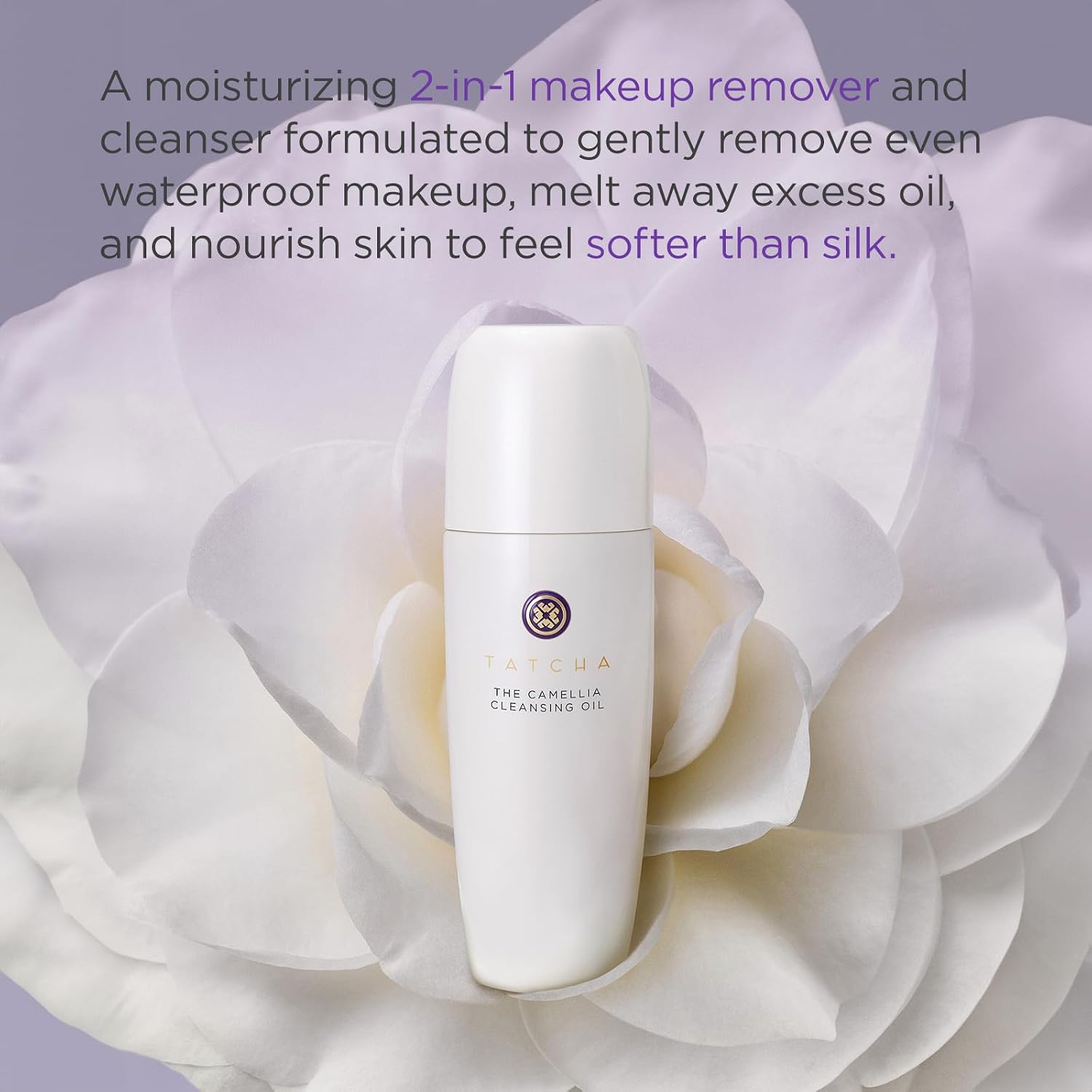
Tatcha The Rice Wash ($38–$65) is positioned as a water-based foam cleanser rather than a true oil cleanser — another common cross-over in search results. For Tatcha’s actual oil-cleansing-adjacent offering, their Pure One Step Camellia Cleansing Oil is the relevant formula. Camellia seed oil is the base, which is oleic-dominant — a nourishing choice for dry and mature skin types, and a format that has deep roots in Japanese cleansing tradition. The emulsification in this formula rinses cleanly in owner reports; reviewers at Byrdie categorize it as one of the cleaner-rinsing prestige options.
Vintner’s Daughter Active Botanical Cleanser ($95) uses a pressed-serum base with rosehip, meadowfoam, and sea buckthorn, among others. The formula is deliberately fragrance-free, which is unusual at this price point where sensory experience is usually a selling point, and it is a meaningful differentiator for sensitized or reactive skin. The INCI list is short and legible. The emulsification relies on a plant-derived blend rather than PEG-based surfactants, which positions it well against Credo Clean Standard and similar frameworks. Owners consistently describe the rinse-off as complete without tightness, though the price-per-use math requires commitment.
Augustinus Bader The Cream Cleanser ($90) is a cream-format option rather than a classic oil, formulated around the brand’s proprietary TFC8 complex. It is less suited to true double-cleansing first-step use on heavy sunscreen and is better positioned as a single-step option for minimal-makeup days or as a second-step cleanser. Worth naming because it frequently appears in the same consideration set as oil cleansers for this audience, but the format does not make it a like-for-like substitute.
The Red Flags Worth Walking Away From
Based on patterns across the INCI lists reviewed, these are the signals that should prompt a closer look before you commit:
Mineral oil or petrolatum as the primary base — not a safety concern per mainstream toxicology, but a greenwashing signal in a “natural” or “clean” positioning. Per the Credo Clean Standard’s publicly documented restricted list, petrolatum is restricted from Credo-sold formulas unless pharmaceutical grade and accompanied by origin documentation, which most brand disclosures do not include.
“Fragrance” without certification or disclosure — synthetic fragrance is a catch-all term that can contain hundreds of undisclosed compounds. In an oil cleanser that sits on dry skin before emulsification, fragrance ingredients have extended contact time compared to a rinse-off gel. Credo Beauty’s blog on the Clean Standard specifically calls out fragrance transparency as one of the trickiest areas in clean-beauty compliance.
Emulsifier-free formulas marketed as “rinseable” — some oil-serum hybrids or facial oils are positioned as cleansers when they are not. An oil without an emulsifying agent does not rinse clean with water; it requires a warm cloth to remove and cannot be considered a first-step double-cleanse replacement. Check for polysorbates, PEG-esters, or plant-based glucoside emulsifiers in the INCI list.
The Decision Framework: If X, Then Y
You have the INCI knowledge now. Here is where it converts into a clear call.
If your primary goal is SPF and makeup removal for oily or acne-prone skin: Choose a linoleic-dominant base (sunflower, hemp, rosehip leading the INCI list), with a confirmed emulsifier, and fragrance-free or essential-oil-free formulation. The Farmacy Green Clean (with its MADE SAFE certification) is a defensible mid-tier choice; Vintner’s Daughter is the prestige choice that meets all three criteria.
If you have dry or sensitized skin and prioritize nourishment alongside cleansing: An oleic-dominant base (camellia, marula, argan) with a clean emulsifier is your framework. Tatcha’s camellia oil formula fits; so does the Augustinus Bader Cream Cleanser if your makeup load is light.
If you are shopping under a strict certification standard (EWG Verified, MADE SAFE, Credo Clean): Filter first by certification, then evaluate the INCI for base oil profile and emulsifier type. MADE SAFE-certified formulas like Farmacy Green Clean and several Tata Harper offerings meet a documented standard rather than self-reported “clean” claims.
If the INCI list has fragrance without a MADE SAFE or similar safety review behind it, and you have reactive skin: That is your exit condition. The sensory appeal is not worth the risk when the formula’s job is to sit on your bare skin before water arrives.
The double cleanse works when the first step actually works. Reading the INCI list before you buy is the one habit that makes the rest of the ritual worth building.