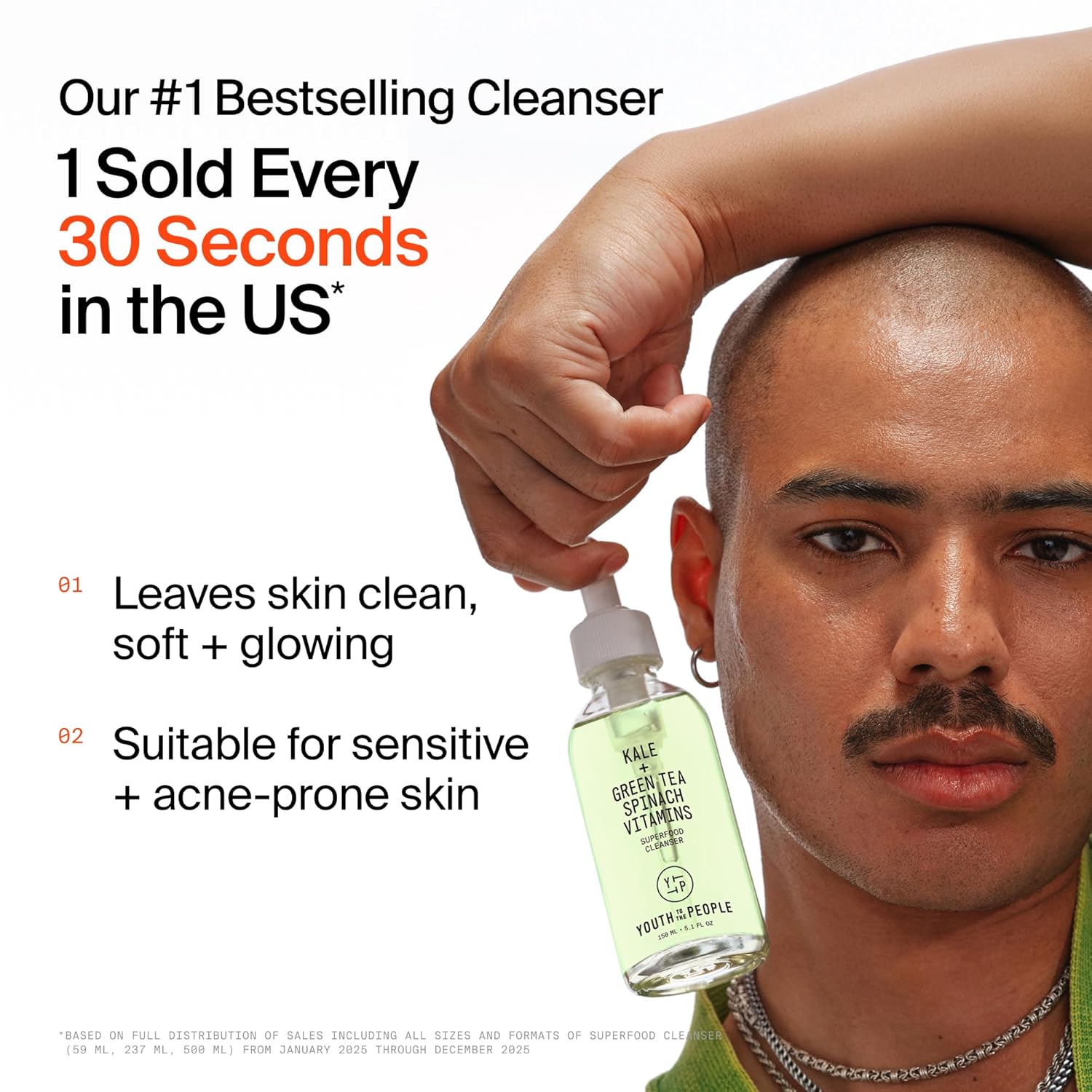
If you’ve ever stood in a beauty aisle — or scrolled through a product page at midnight — wondering whether a $12 cleanser is quietly doing the same job as a $90 one, you’re not alone. A face cleanser is any wash, balm, oil, or gel formulation designed to remove makeup, sunscreen, pollutants, and excess sebum (skin oil) from your face without stripping its natural protective barrier. The cleanser category runs from drugstore basics to artisan botanical formulas, and the price gap between them can feel almost comically wide. This article is for the reader who already knows what they want from a cleanser — a gentle, effective, clean-formulated wash — and is now asking the sharper question: does paying more actually change the formula in ways that matter for your skin, or are you paying for branding, packaging, and prestige? We’re going to go tier by tier, match ingredient lists against each other, and give you a clear decision rule at the end.
| EDITOR'S PICK[Dermalogica Special Cleansing G…](https://www.amazon.com/dp/B0006B78OO?tag=greenflower20-20) | Mid-tier[Glo Skin Beauty Hydra-Bright AH…](https://www.amazon.com/dp/B005LXEDTK?tag=greenflower20-20) | Budget pick[ROUND LAB 1025 Dokdo Cleanser](https://www.amazon.com/dp/B08FMCMGN6?tag=greenflower20-20) 5… | |
|---|---|---|---|
| Size | 16.9 Fl Oz | 6.7 Oz | 5.07 Fl Oz |
| Key Ingredient | — | Lactic Acid | Deep Sea Water |
| Skin Type | — | Dry, Oily, Sensitive | Sensitive |
| Formulation | Gentle-Foaming | Hydrating | Low pH |
| Exfoliating | — | ✓ | — |
| Makeup Removal | — | — | ✓ |
| Price | $73.00 | $42.00 | $11.38 |
| See on Amazon → | See on Amazon → | See on Amazon → |
What “Dupe” Actually Means at the Formula Level
The word “dupe” gets thrown around loosely in beauty, and it’s worth tightening the definition before we go further. A true formula dupe isn’t just a product that looks similar or costs less — it’s one that shares the same functional ingredient architecture: the same class of surfactants (cleansing agents), the same skin-identical or skin-replenishing actives, and a comparable preservative system. Packaging, fragrance, and brand story are separate variables entirely.
Paula’s Choice Expert Advice, in their guide on how to read a cosmetic ingredient list, makes a useful distinction: the first five to seven ingredients on any INCI list (the standardized, Latin-format ingredient declaration required by law) account for roughly 80–90% of a formula’s weight and performance. Everything below 1% concentration — which is where most botanical extracts and many “hero” ingredients sit — is present at levels that may be more about marketing story than measurable skin impact.
This is the central tension of the prestige-vs-dupe comparison. The Beauty Brains, a cosmetic chemist–led publication, has examined rinse-off products in multiple articles and noted that cleansers have inherently limited contact time with skin — typically 30 to 60 seconds — which constrains how much even a well-formulated active ingredient can accomplish during the cleansing step. The cleanse itself matters. The actives that stay on your skin after rinsing (in your serum, your moisturizer) matter more.
So the dupe question for cleansers is really asking: does the prestige formula cleanse differently, or feel different on skin in ways that meaningfully affect your barrier, your comfort, or your results? Sometimes yes. Sometimes no. Here’s where the gaps actually show up.
The Comparison Grid: Three Formula Matchups
Matchup 1 — Gentle Gel Cleanser: Budget vs. Mid-Tier
Budget entry point: Burt’s Bees Sensitive Facial Cleanser leads with water, glycerin (a humectant — a molecule that draws moisture toward skin), and a mild coconut-derived surfactant blend. The surfactant system relies on sodium cocoyl isethionate and decyl glucoside — both among the mildest cleansing agents available. Cosmetics & Toiletries, in their published analysis of surfactant selection in mild cleansing formulas, identifies glucoside and isethionate surfactants as low on the irritation index relative to conventional anionic surfactants, even in rinse-off applications.
Mid-tier step-up: Youth to the People Superfood Cleanser uses a similar water-glycerin base but layers in a kale and spinach extract complex and adds kombucha as a conditioning agent. The surfactant is still in the gentle glucoside family. Byrdie’s testing coverage of this cleanser notes that reviewers consistently describe it as lathering clean without post-wash tightness — a result that tracks with the surfactant choice rather than the botanical additions.
Where the formula gap is real — and where it isn’t: The core cleansing architecture is functionally comparable between these two tiers. What you’re adding at the $36 price point is antioxidant botanicals at concentrations that are, realistically, below the rinse-off threshold for measurable skin benefit, per The Beauty Brains’ analysis of contact-time limitations in rinse-off formats. The texture and fragrance experience differ. If sensory ritual matters to your routine, that’s a legitimate reason to spend up. If you’re optimizing for barrier safety on a tight budget, the entry-tier formula holds its own.
ROUND
$11.38
In stock on Amazon
Check price on AmazonMatchup 2 — Balm-to-Milk Makeup Remover: Mid-Tier vs. Prestige
Mid-tier: Farmacy Green Clean Makeup Meltaway Balm dissolves with a sunflower seed oil and caprylic/capric triglyceride base — a coconut-derived emollient that gives the balm its silky slip. It emulsifies (turns milky when water contacts it) cleanly and rinses without a greasy film. Byrdie’s cleanser testing consistently includes this formula among top performers for dissolving SPF and long-wear foundation without mechanical tugging on skin.
Prestige tier: Tatcha The Rice Wash and Augustinus Bader The Cream Cleanser occupy different architectural territory. Tatcha leads with a rice bran and Okinawa algae complex alongside mild amino acid surfactants — specifically sodium lauroyl methyl isethionate, a class Cosmetics & Toiletries identifies as among the gentlest available. Augustinus Bader’s formula centers on their TFC8 (Trigger Factor Complex), a proprietary blend of amino acids, vitamins, and synthesized molecules. The TFC8 complex is present in leave-on products in the line at studied concentrations; in a rinse-off cleanser, contact time constrains its activity, as The Beauty Brains’ framework for evaluating rinse-off actives would predict.
Where the formula gap is real — and where it isn’t: The balm-to-milk format itself does real work that a gel cannot replicate — specifically for heavy SPF and full-coverage makeup removal. At this format level, Farmacy Green Clean earns its place at $34 because the format is functional, not aspirational. The jump to the $65–$90 prestige tier adds the TFC8 narrative and a genuinely differentiated amino acid surfactant system. For sensitized or barrier-impaired skin, that surfactant class may perform meaningfully better — Paula’s Choice Expert Advice specifically flags amino acid surfactants as preferable for reactive skin types over conventional alternatives. If your skin is balanced and you’re removing a light daily SPF, the Farmacy formula closes most of the gap.
Glo
$42.00
In stock on Amazon
Check price on AmazonMatchup 3 — Botanical Oil Cleanser: Mid-Tier vs. Premium
Premium tier: Vintner’s Daughter Active Botanical Cleanser uses 22 plant-based oils and botanicals, a slow cold-process manufacturing approach, and carries Credo Clean Standard verification. The Credo Beauty Blog, in their explanation of the Credo Clean Standard, notes that Credo prohibits over 2,700 ingredients — including many conventional emulsifiers and preservatives that appear in formulas positioned as “natural.” The Vintner’s Daughter formula clears that bar by a wide margin. The EWG Skin Deep database scores this formula notably low in hazard ratings relative to many mid-tier cleansers that rely on synthetic emulsifiers or conventional preservative systems.
Mid-tier comparison: Farmacy Green Clean is the closest format analog at $34. Both are oil-first cleansers that emulsify on contact with water. But the INCI architecture differs meaningfully: Vintner’s Daughter uses whole botanical oils — rosehip, sea buckthorn, meadowfoam seed — rather than fractionated triglycerides. The concentration of actives, particularly the vitamin A precursor from rosehip and the phytosterols in sea buckthorn, is higher relative to the formula’s overall weight.
Where the formula gap is real — and where it isn’t: For shoppers who cross-reference EWG Skin Deep hazard ratings, MADE SAFE certification, and Credo’s Clean Standard simultaneously, no mid-tier dupe fully satisfies that brief. The supply chain for certified, cold-processed whole botanical oils has a floor cost that makes a $34 retail price structurally impossible. The cost-per-use math also narrows at this tier: a 100mL bottle used twice daily yields approximately 45–60 days of use, bringing the daily cost to roughly $1.58–$2.11 — comparable to a daily supplement. For shoppers whose priority is clean certification depth rather than ingredient integrity alone, the gap at this tier is genuine.
Dermalogica
$73.00
In stock on Amazon
Check price on AmazonWhere Prestige Formulas Earn the Price Premium — and Where They Don’t
Being honest here means naming both sides clearly.
Prestige earns it when:
- The surfactant system is genuinely milder — amino acid–based versus sulfate-adjacent — and your skin is sensitized or barrier-impaired. Cosmetics & Toiletries’ published research on surfactant mildness consistently shows that amino acid surfactants carry a lower irritation index than conventional anionic surfactants even in rinse-off applications.
- The formula holds a third-party certification (EWG Verified, MADE SAFE, Credo Clean Standard) that a lower-cost formula cannot match — because clean certification carries real supply chain and compliance costs that are reflected in retail price.
- The format itself is differentiated: a true cold-pressed botanical oil cleanser is genuinely difficult to replicate at $14, because raw material costs alone prohibit it.
Prestige doesn’t earn it when:
- The primary point of difference is a botanical extract sitting below 1% in the INCI list — below the threshold where it is likely to do measurable work in a rinse-off application, per The Beauty Brains’ analysis of contact-time limitations in rinse-off formats.
- The fragrance profile is the main sensory difference. Fragrance, even natural fragrance, is a documented sensitizer flagged both by Paula’s Choice Expert Advice and the EWG Skin Deep database as a common irritation trigger.
- The certification is brand-owned and self-defined rather than independently audited by a third party with published standards.
The Decision Rule
You’re reading this because you have a choice to make — maybe you’re stocking your first real routine, maybe you’re recommending something to a client, maybe you’re deciding whether to reorder at the prestige tier or redirect that budget to a serum.
Here’s the framework, stated plainly:
If your skin is balanced and your primary goal is clean, thorough removal of a light daily SPF and minimal makeup: The mid-tier glucoside or balm-to-milk formats in the $12–$36 range do the functional job. Spend the saved margin on a leave-on treatment where contact time allows actives to actually work — that’s where the investment pays measurably.
If your skin is sensitized, barrier-impaired, or reactive, and you’ve cycled through the usual suspects without relief: The amino acid surfactant systems in the $65–$90 tier are worth evaluating. Owners with rosacea and eczema-adjacent skin consistently report comfort differences at this tier in aggregated testing and editorial reviews, including Byrdie’s long-term wear assessments — and for compromised barriers, the cleanser is not a commodity step.
If ingredient integrity and certification standards drive your purchasing philosophy — and you’re the shopper cross-referencing EWG Skin Deep, MADE SAFE, and the Credo Clean Standard simultaneously — the true botanical oil formulas at the Vintner’s Daughter tier are the only formulas that fully satisfy that brief. No dupe exists at $34, because the supply chain that produces certified, cold-processed whole botanical oils has a floor cost that is structurally incompatible with a $34 retail price.
If you’re gifting or recommending to someone building their first considered routine: Start them at Farmacy Green Clean or Youth to the People. The sensory experience reads prestige; the formula is sound; and it sets a quality baseline without locking them into a $90 commitment before they understand their skin’s preferences.
The cleanser is the foundation of every skincare routine — but foundation work doesn’t always require the most expensive material. Know what you’re paying for, match it to what your skin actually needs, and reallocate the rest with intention.