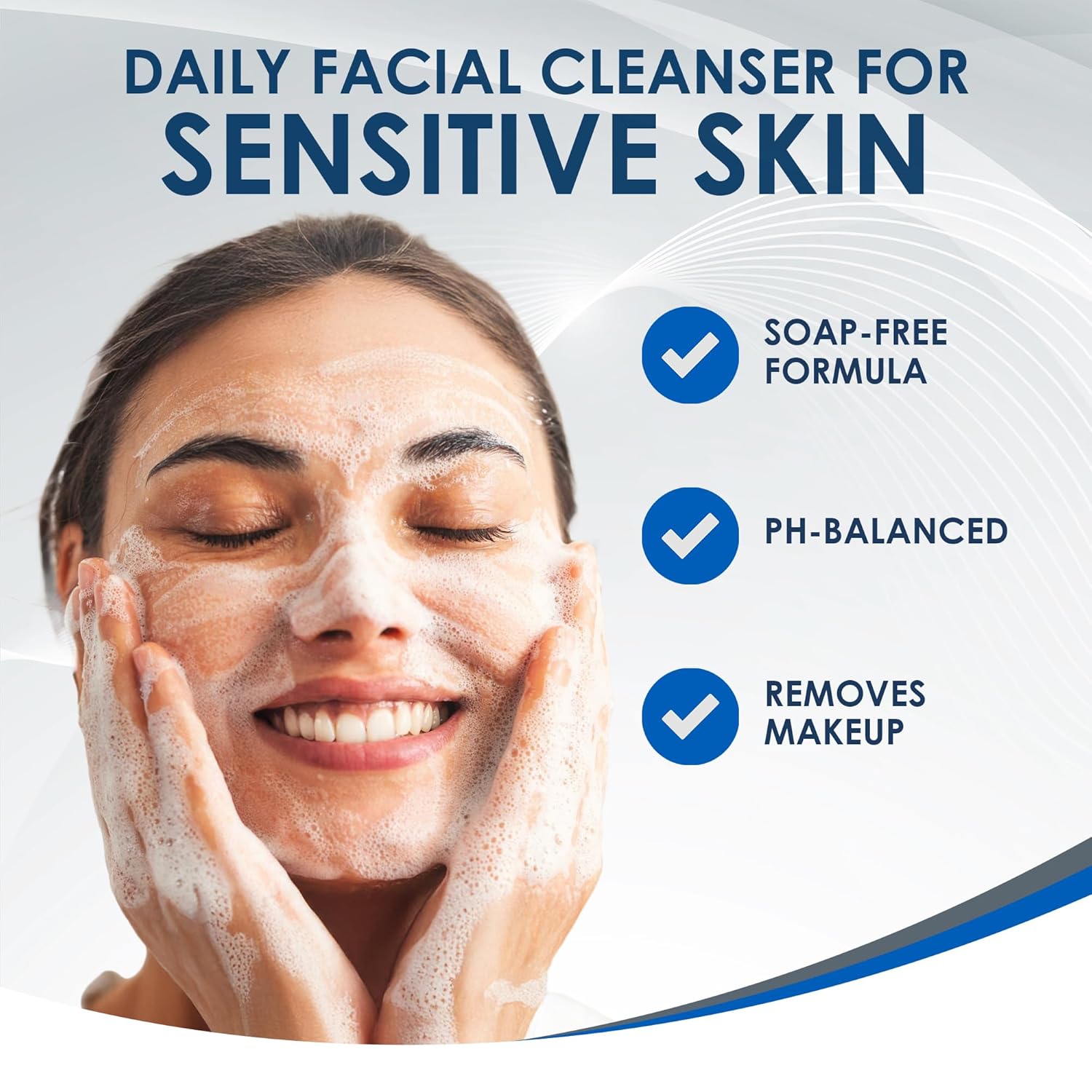
If you’ve been told your skin is “sensitized” — meaning it flushes, stings, or reacts to products that other people use without issue — you’ve probably started scanning cleanser labels for the word “fragrance-free.” That makes complete sense. Fragrance is one of the most common triggers for skin reactions, and removing it is often the single highest-leverage change a reactive-skin person can make to their routine. But here’s where it gets complicated: “fragrance-free” and “unscented” are not the same claim. One means a product contains no fragrance ingredients at all. The other often means the product contains masking fragrance — chemicals added specifically to neutralize the smell of other ingredients — which means there’s still fragrance in the formula, just hidden. This article breaks down the labeling distinction, shows you how to catch masking fragrance in an INCI list (that’s the standardized ingredient list required on every cosmetic sold in the US and EU), and audits several well-known cleansers so you can make a faster, more confident call when your next purchase is pending.
The Label Trap: Why “Unscented” ≠ “Fragrance-Free”
The U.S. Food and Drug Administration’s Cosmetics Labeling Guide is explicit on this point but buries it in regulatory language most shoppers never read. Here’s the plain version: the FDA does not require brands to disclose fragrance components individually. A company can list the entire fragrance cocktail — potentially dozens of individual chemical compounds — under the single word “fragrance” or “parfum.” That’s a known loophole that the clean-beauty community has been pressuring the industry to close for years.
The “unscented” claim makes it worse, not better. As The Beauty Brains has documented in their ingredient analysis work, unscented formulas routinely contain masking agents — fragrance molecules chosen because they’re odor-neutralizing rather than odor-adding. The finished product smells like nothing (or like “clean”), but the reactive ingredients are still present. Credo Beauty’s published Clean Standard, which governs what brands can sell on the Credo platform, specifically calls out masking fragrance as a category requiring disclosure — one reason Credo’s restricted ingredient list is a useful proxy when you don’t want to decode every INCI yourself.
Paula’s Choice Expert Advice section is direct about the clinical stakes: fragrance is a leading cause of allergic contact dermatitis and irritant contact dermatitis in leave-on and rinse-off products alike, with rinse-off products like cleansers often underestimated because the contact time is short. Contact time matters less than concentration and skin barrier status — if your barrier is already compromised (sensitized skin, post-treatment skin, or rosacea-prone skin), even brief exposure to a known sensitizer can trigger a cascade.
What to look for in the INCI:
Confirmed fragrance-free means none of these appear in the ingredient list:
- “Fragrance” or “Parfum”
- “Aroma” (common in natural/botanical brands)
- Linalool, Limonene, Citronellol, Geraniol, Eugenol (naturally-occurring fragrance allergens that must be disclosed individually in the EU but can hide under “fragrance” in the US)
- Benzyl alcohol (when used as a fragrance fixative — it also appears as a preservative, so context matters)
This is the first decision gate. Before you evaluate texture, price, or any other factor: does this formula pass the fragrance-free test?
By the Numbers
| Label Claim | Fragrance Ingredients Present? | Regulatory Disclosure Required? |
|---|---|---|
| Fragrance-Free | No | N/A |
| Unscented | Often yes (masking agents) | Not required in the US |
| ”Natural fragrance” | Yes — essential oils, plant extracts | Varies; EU requires allergen disclosure |
| No added fragrance | Ambiguous — may contain inherently scented ingredients | No standard definition |
Per EWG’s Skin Deep database methodology, fragrance as a blanket ingredient is flagged at a hazard score of 8 out of 10 for allergy and immunotoxicity — one of the highest scores in their system for a single ingredient term.
Auditing the Cleansers: Where Common Picks Land
This is where intermediate-level buyers often stall. You know the distinction conceptually, but you’re looking at a specific product page with a purchase decision pending. Here’s an honest audit of the cleansers most frequently recommended for sensitive skin, organized by what the INCI actually shows — not what the marketing claims.
Cleansers that genuinely clear the bar:
CeraVe Hydrating Facial Cleanser is the most-cited dermatologist recommendation for sensitized skin, and it earns it on the ingredient list: no fragrance, no parfum, no essential oils. Reviewers across aggregated skincare communities consistently note that it’s one of the few drugstore cleansers that doesn’t trigger perioral or periorbital irritation, even on compromised skin. The tradeoff is texture — it’s a milky liquid that some find underwhelming for heavy makeup removal, so it often works best as a second-cleanse or AM cleanser rather than a standalone PM step.
Vanicream Gentle Facial Cleanser is another clean-INCI example. Vanicream built its entire brand identity around fragrance-free, dye-free, and formaldehyde-releaser-free formulation, and the Skin Deep database confirms the positioning. Healthline’s overview of fragrance sensitivity lists Vanicream as a go-to reference brand for patch-test-safe formulations. The limitation: minimal lipid content, so it can feel tight on very dry or dehydrated skin types.
Youth to the People Superfood Cleanser positions itself in the clean-beauty mid-tier and gets significant editorial coverage at Byrdie and Allure for its antioxidant ingredient story. The INCI is notably fragrance-free and the formula relies on green tea, spinach, and kale extracts for its “superfood” positioning — none of which are fragrance compounds. It’s a gel texture, which makes it better suited to normal-to-oily sensitized skin than to dry-sensitized skin. Owners with redness-prone combination skin consistently report it as non-aggravating.
Tatcha The Rice Wash requires a closer read. The brand’s “pure” positioning and its EWG Verified status on select products gives it credibility, but the Rice Wash INCI includes Camellia Sinensis leaf extract and Uji Matcha, both of which can contain naturally-occurring fragrant compounds. For most sensitized skin, these don’t register as irritants. For highly reactive skin — especially anyone with confirmed botanical contact allergy — it’s worth noting. EWG Verified status does require disclosure of any fragrance components, so the absence of a fragrance flag on verified products carries more weight than a standard “fragrance-free” label claim alone.
Cleansers where the label and the INCI diverge:
Many “natural” and “botanical” cleansers — particularly in the $12-$20 tier — label themselves as “unscented” or use language like “pure” or “clean” without meeting a strict fragrance-free standard. Acure’s Brightening Facial Scrub, a popular entry-level pick, contains lemon peel oil and turmeric extract, both of which include fragrance-active compounds. For the majority of users, this isn’t a problem. For sensitized skin specifically, lemon peel oil is a photosensitizer and a known allergen per EU fragrance regulations. This doesn’t make it a bad product — it makes it the wrong product for the wrong skin type, and the marketing does nothing to help buyers sort that out.
Farmacy Green Clean Makeup Meltaway Balm is broadly beloved for its balm-to-oil texture and effective makeup removal, and it genuinely works well for most skin types. The INCI includes sunflower oil, papaya enzyme, and turmeric — clean ingredients, but not fragrance-free in the strict sense. For sensitized but not highly reactive skin, the formula is generally well-tolerated based on aggregated owner reports. For anyone managing active eczema, rosacea flares, or post-procedure sensitivity, it’s not the cleanser to reach for.
The Decision Frame: If X, Then Y
If you’re building or recommending a cleanser routine for sensitized skin, here’s how to cut through the options quickly.
If the skin barrier is actively compromised — post-peel, mid-rosacea flare, or eczematous — the only appropriate cleansers are confirmed fragrance-free with minimal actives. CeraVe Hydrating Cleanser and Vanicream Gentle Facial Cleanser are the two that consistently hold up under this constraint. Everything else involves some trade-off.
If the skin is sensitized but stable — reactive to some products but not currently inflamed — the decision expands. Youth to the People Superfood Cleanser is a solid mid-tier choice for oily-to-combination sensitized skin. Tatcha The Rice Wash is a reasonable prestige option with the caveat about botanical sensitization risk; if the person has no confirmed botanical allergy, the EWG Verified version is a fair recommendation.
If the primary concern is makeup removal — and the skin is sensitized but not severely reactive — look at fragrance-free cleansing balms and oils before reaching for Farmacy Green Clean. Cocokind’s Ceramide Barrier Serum Cleanser and Albolene (unrefined mineral oil formula) are worth the ingredient audit. The balm-to-milk texture category generally performs well for sensitized skin because the emulsifying process requires less mechanical friction than gels or foams.
If you’re evaluating for someone else — a client, a gift recipient, or a retail recommendation — default to EWG Verified or Credo Clean Standard products and cross-reference the INCI for the fragrance allergens listed above. The Credo platform’s restricted ingredient list is publicly available on their site and is a faster shortcut than reading every INCI from scratch.
If the budget is the binding constraint — both CeraVe and Vanicream land under $15 and represent the honest answer for fragrance-free sensitive-skin cleansing. The prestige tier adds texture elegance and sometimes better formulation depth, but on the core metric of fragrance-free integrity for compromised skin, the drugstore options are genuinely competitive with products at five times the price.
One More Thing: “Natural Fragrance” Is Not a Safe Harbor
As the clean-beauty space has matured, “natural fragrance” has become its own category of ambiguity. Essential oils — lavender, rose, bergamot, eucalyptus — are among the most common contact allergens in cosmetics. The EU’s Scientific Committee on Consumer Safety maintains a list of 82 fragrance allergens that require individual disclosure at concentrations above 0.001% in leave-on products and 0.01% in rinse-off products. The US has no equivalent requirement.
This is why the EWG Verified mark and the Credo Clean Standard are genuinely useful for sensitized-skin buyers rather than just marketing signals. Both require fragrance component disclosure beyond what US law mandates. When a brand achieves either certification and still claims fragrance-free, that claim has been audited — not just asserted.
The bottom line: treat “unscented” as a flag that triggers an INCI read, not as a green light. Treat “fragrance-free” as a claim worth verifying against the ingredient list. And treat a third-party certification as the highest available signal that the claim has been checked by someone other than the brand itself.