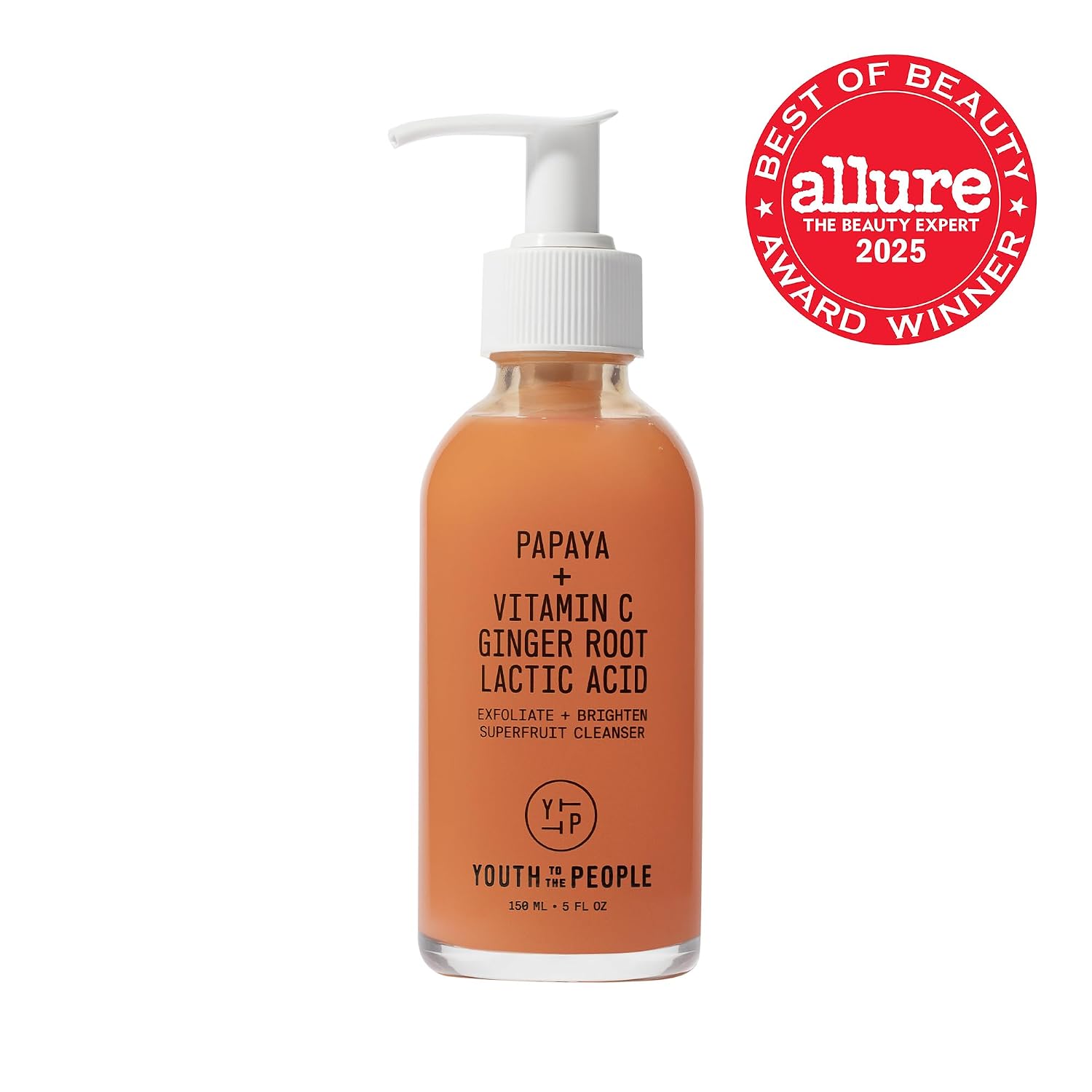
Vitamin C is everywhere in skincare right now — and for good reason. It’s a proven brightening agent (meaning it helps fade dark spots and even out skin tone over time) and a powerful antioxidant (meaning it helps neutralize environmental damage before it ages your skin). You’ll find it in serums priced at $20 and $200 alike. But lately it’s been showing up in cleansers — your everyday face wash, the product you rinse off after 30 to 60 seconds. The promise sounds great. The question worth asking before you spend $25 to $65 on a vitamin C–spiked cleanser: does a rinse-off product actually deliver the goods, or is the vitamin C mostly going down the drain along with your makeup?
That’s exactly what this article unpacks. We’ll walk through the real science of how vitamin C works, why formulation details matter more than marketing copy, where rinse-off vitamin C can still pull its weight, and how to decide whether a vitamin C cleanser deserves a slot in your routine — or whether your money is better spent on a leave-on product.
How Vitamin C Actually Works (and Why Contact Time Is Everything)
To understand the cleanser debate, you need to understand the basic mechanism. Vitamin C (most commonly formulated as ascorbic acid, or L-ascorbic acid) brightens skin through two main pathways: it inhibits an enzyme called tyrosinase, which the skin uses to produce melanin (the pigment responsible for dark spots), and it acts as a cofactor in collagen synthesis. Both of these are cumulative, time-dependent processes. The ingredient has to stay in contact with skin cells long enough — and at a sufficient concentration — to actually trigger the biochemical response.
Paula’s Choice Expert Advice notes that effective leave-on vitamin C serums typically require concentrations between 10% and 20% ascorbic acid, formulated at a specific low pH (around 3.5) so the molecule can penetrate the skin’s outer barrier. That penetration window takes minutes, not seconds.
A rinse-off cleanser sits on your skin for roughly 30 to 60 seconds, then gets washed away with water. The Beauty Brains, in their analysis of rinse-off actives, have made the point clearly: for an ingredient to produce a biological effect, it needs to be absorbed into the stratum corneum (the outermost skin layer) at a meaningful level, and most rinse-off timeframes are too brief for that to happen with water-soluble actives like ascorbic acid at standard wash concentrations.
This is the core tradeoff you’re evaluating every time you see “brightening” on a cleanser label.
The Stability Problem Makes It Worse
Even if contact time weren’t a concern, vitamin C faces a second challenge in cleanser formulations: it’s notoriously unstable.
Ascorbic acid oxidizes rapidly when exposed to water, air, and light — turning yellow, then brown, and losing potency as it does. Cosmetics & Toiletries has published extensively on this stability challenge, noting that formulators working with ascorbic acid in water-based systems must navigate a narrow pH window and use packaging and preservative strategies specifically designed to slow oxidation.
Most rinse-off cleansers are water-based, dispensed from open pump tops or squeeze tubes, and experience repeated air exposure every time they’re used. That’s essentially the worst possible environment for vitamin C stability.
By the numbers:
- Effective ascorbic acid concentration for topical brightening: 10–20% (Paula’s Choice Expert Advice)
- Typical cleanser contact time: 30–60 seconds
- Vitamin C half-life in unstabilized water formulations: as little as a few days to weeks at room temperature (Cosmetics & Toiletries)
- pH needed for L-ascorbic acid skin penetration: ≤3.5; most cleansers run pH 5.5–7 to avoid irritation
That last point is worth pausing on. To keep a cleanser from irritating or stripping skin, formulators keep pH in the skin-friendly range. But that same pH range dramatically reduces ascorbic acid’s ability to penetrate — even if there were enough contact time.
When Vitamin C in a Cleanser Isn’t Completely Useless
Here’s where the honest picture gets more nuanced, because writing off vitamin C cleansers entirely misses some legitimate use cases.
Derivative forms of vitamin C behave differently. Many cleansers that claim vitamin C benefits aren’t using raw ascorbic acid. They’re using derivatives like sodium ascorbyl phosphate, ascorbyl glucoside, or magnesium ascorbyl phosphate. These are more stable in water-based formulations and at higher pH levels. The tradeoff, as Healthline’s overview of vitamin C forms notes, is that derivatives are less potent and require conversion by the skin to become active — which takes even longer than ascorbic acid itself. But they don’t oxidize and they survive on the shelf. In a rinse-off context, they’re still unlikely to deliver meaningful brightening, but they’re not inert theater either — some research suggests brief topical exposure to these forms may offer low-level antioxidant protection to surface skin cells.
The antioxidant rinse argument. Even a brief exposure to antioxidants during cleansing may help neutralize some of the reactive oxygen species (unstable molecules that cause oxidative damage) that accumulate on skin from pollution and daily environmental exposure. EWG’s Skin Deep database rates ascorbic acid with a solid safety profile and acknowledges its antioxidant function. Some estheticians make the case that a vitamin C–infused cleanser acts less like a treatment and more like an antioxidant pre-treatment — a gentle neutralizing rinse before your leave-on actives. It’s a modest benefit, but it’s a real one.
Brightening via physical or secondary ingredients. Many “brightening” cleansers that feature vitamin C also include glycolic acid, niacinamide, or fruit enzymes — leave-on-style actives that may not fully rinse off or that act quickly enough to provide some surface-level exfoliation. If you’re seeing results from a vitamin C cleanser, there’s a reasonable chance another ingredient in the formula is doing a lot of the heavy lifting. Worth reading the INCI list (the standardized ingredient list on the back of the product) before attributing results to vitamin C alone.
Product Landscape: What You’re Actually Buying
Byrdie’s coverage of vitamin C cleansers notes that reviewer enthusiasm for this category tends to focus on texture and glow immediately post-wash — a radiance that’s often the result of gentle exfoliants or skin-softening ingredients rather than confirmed vitamin C activity. That’s not a reason to avoid these products; it’s a reason to evaluate them honestly.
At the entry tier, cleansers like Acure’s Brightening formulas (around $10–$12) use vitamin C derivatives alongside brightening botanicals. Reviewers consistently describe a nice skin feel and surface glow — but that’s a reasonable ask from a $12 cleanser, and it appears to deliver on that modest brief. Expecting hyperpigmentation correction is a different ask entirely.
Mid-tier options like Farmacy’s Bright Fix line (around $28–$34) lean into vitamin C alongside other actives, and the brand’s marketing is transparent enough that ingredient-literate buyers can calibrate expectations. The formulations are more sophisticated, but the contact-time physics don’t change.
At the prestige tier, cleansers from brands like Tatcha or Augustinus Bader are less focused on vitamin C as a hero and more focused on barrier support and skin-feel luxury — arguably a more honest use of the rinse-off format.
If your primary goal is actual, documented brightening of dark spots and uneven tone, the evidence strongly favors leave-on vitamin C serums at 10–20% concentration, in opaque, air-restrictive packaging, applied after cleansing and left on skin. Healthline’s overview of vitamin C serums documents the clinical literature consistently supporting leave-on application for hyperpigmentation correction.
The Decision Frame: If X, Then Y
Here’s the honest framework for deciding whether a vitamin C cleanser belongs in your routine:
If your goal is real hyperpigmentation correction — fading post-acne marks, sun spots, melasma — a vitamin C cleanser is the wrong tool. Invest that money in a leave-on serum at therapeutic concentration. A $36–$65 cleanser will not do what a $35–$55 serum can.
If your goal is a nice daily glow and a sophisticated cleansing ritual — and you’re already running leave-on actives that handle the real brightening work — a vitamin C cleanser can be a pleasant, low-risk addition. Just read the full INCI list and make sure you’re not paying a vitamin C premium for a formula where it’s listed 15 ingredients from the bottom (which indicates a concentration too low to matter even in a leave-on).
If you’re ingredient-conscious and stability-focused — look for derivative forms (sodium ascorbyl phosphate, ascorbyl glucoside) and opaque, minimal-air-exposure packaging. Avoid clear bottles or products that have gone visibly yellow or tan; that oxidation means the vitamin C activity is already compromised before it reaches your skin.
If you’re an esthetician recommending take-home regimens — be honest with clients that a vitamin C cleanser is an antioxidant-assist and a sensory experience, not a clinical brightening treatment. Pairing it with a leave-on vitamin C serum for clients who want a vitamin C “theme” throughout their routine is a legitimate strategy, as long as expectations are set correctly.
The bottom line: vitamin C in a cleanser isn’t a gimmick, exactly — but the marketing claims almost always outrun the formulation reality. A well-formulated vitamin C cleanser is a pleasant, antioxidant-forward step. A leave-on vitamin C product is where the brightening science actually lives. The smartest routines use both, with eyes open about which one is doing which job.